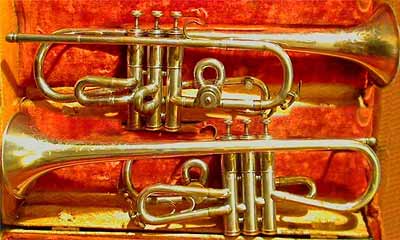
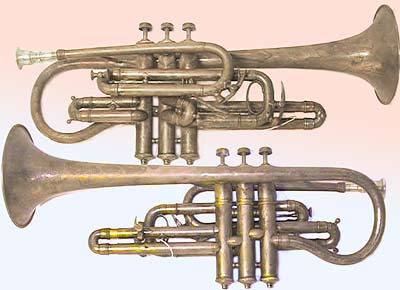
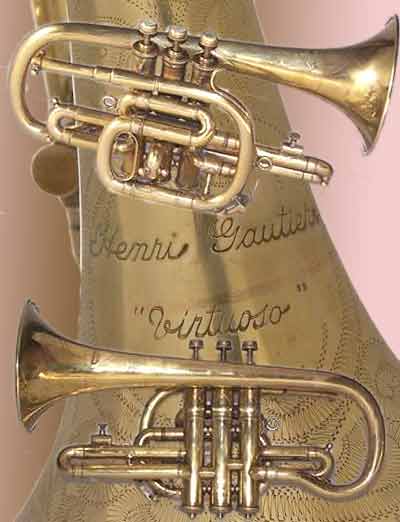
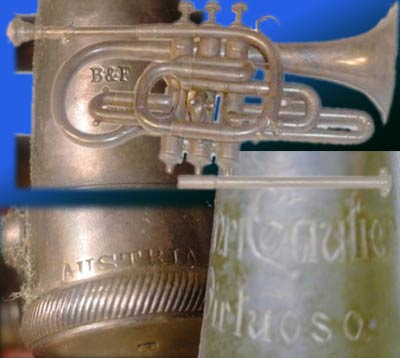
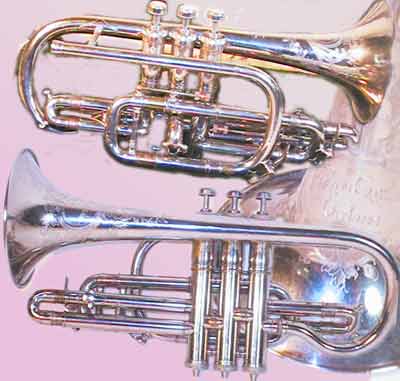
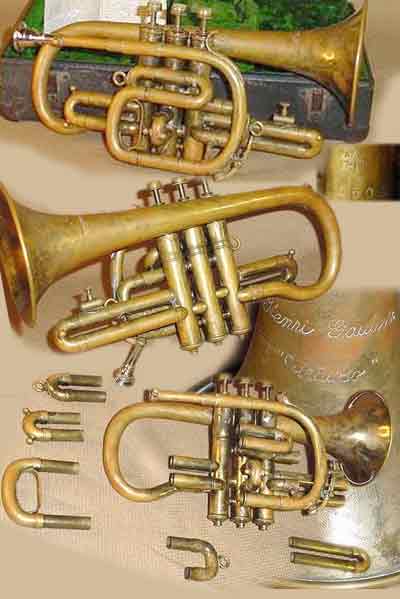
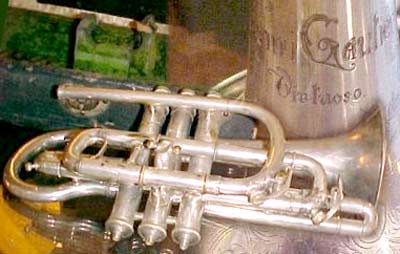
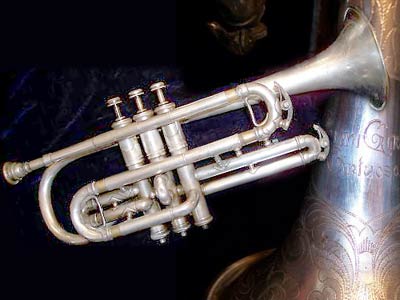
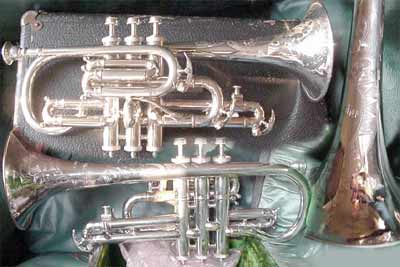
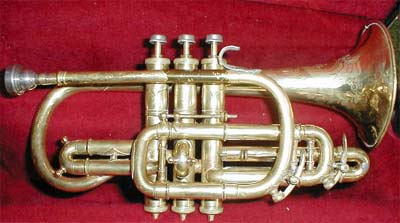
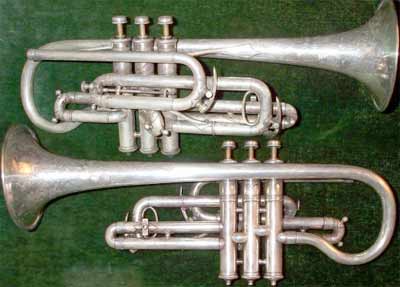
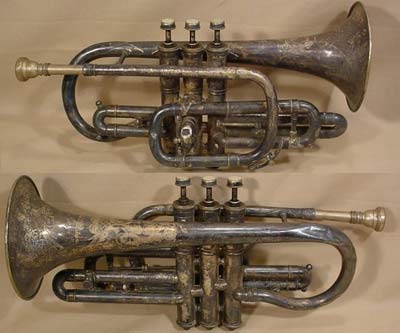
| gsmonks: You know, in going over this model of horn and trying to calculate the conical-to-cylindrical ration, they have more cylindrical tubing than any modern cornet or "trumpet".
Pryorphone: Or at least as much as a modern trumpet, given the small bell flare. I would guess that there is about a was between the 2 tuning slides here (one Bb/A, and one tuning) and the usual modern trumpet slide, which evolved long enough do both. The ONLY difference is that this cornet starts off with a [slightly] smaller mouthpipe/mouthpiece size!
gsmonks: The modern "trumpet" and cornet have exactly the same amount of conical and cylindrical tubing. You start off with a conical mouthpiece receiver and mouthpiece stem, around 10" of conical lead-pipe, and a conical bell-section. The rest is cylindrical. The average is 65% conical to 35% cylindrical.
This particular horn has a very short lead-pipe, and the rest of its plumbing, except for the bell, is cylindrical. I would say its ratio is far closer to 50%, maybe 55% conical vs 45% cylindrical.
kenton:I wonder if that is true of all the "S" cornets?
Pryorphone: Without taking [possible] differences in the mouthpiece and bell throat, sure! Look at all that cylindrical slide tubing, plus the valve tubing. Some cornets have "stepped" cylendrical tubing as you go further along (but then again, so do some "modern" trumpets, for that matter... )
|