| ID | Instrument | Maker | Model | Serial# | Manuf. Date | Key/Pitch | Click on Picture to Enlarge |
|---|---|---|---|---|---|---|---|
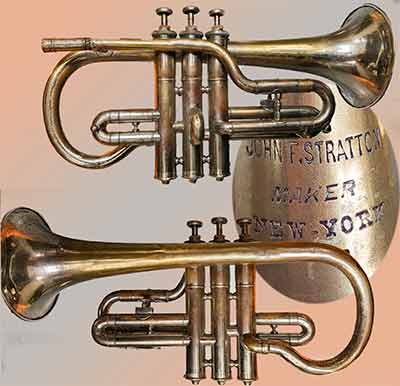
| 11475 | Cornet | Stratton | Eb LP |
 |
|||
| Polished nickel finish, mostly worn off. JOHN F. STRATTON | MAKER | NEW-YORK Bell: 4-3/8in Length: 12-1/4in Missing pinky ring that attached to the top of the tuning slide sleeve. c. 1885 Estimated date is based on comparison with similar models by Boosey & Distin. | |||||||
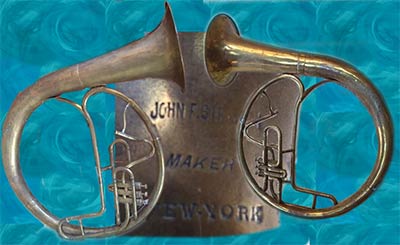
| 11469 | Helicon | Stratton |
 |
||||
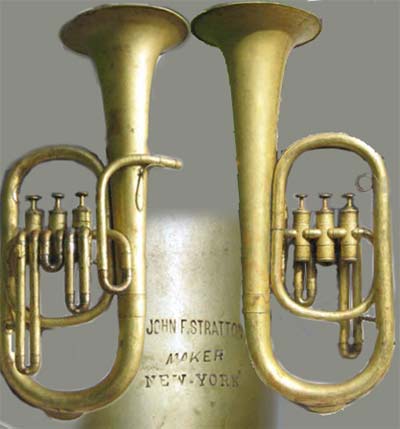
| 10480 | Alto Horn | Stratton |
 |
||||
| Pumpen valves Height: 21in Bell: 7 1/4in Post Civil War | |||||||
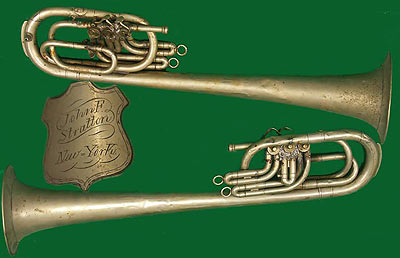
| 8967 | Alto Horn | Stratton | Eb |
 |
|||
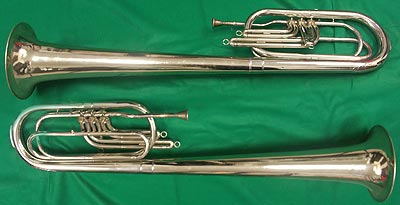
| 8966 | Tuba | Stratton | Eb |
 |
|||
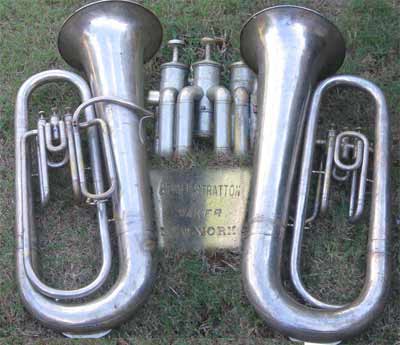
| 8954 | Tuba | Stratton | Eb |
 |
|||
| John F. Stratton | Maker | New York Berliner valves. | |||||||
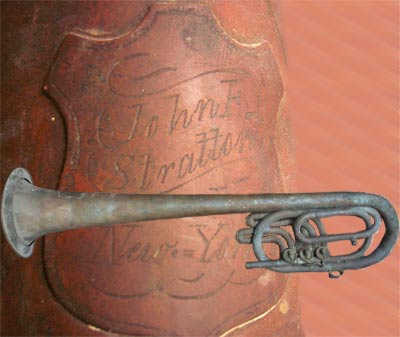
| 8829 | Alto Horn | Stratton |
 |
||||
| Engraved: John F | Stratton | New York | |||||||
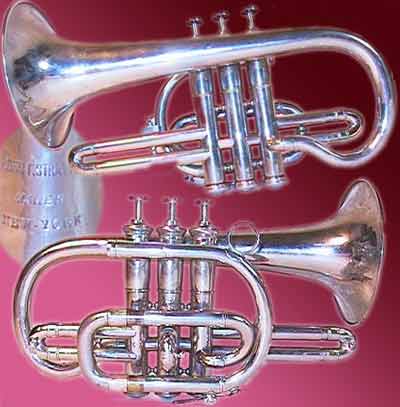
| 8688 | Cornet | Stratton |
 |
||||
| 8518 | Cornet | Stratton |
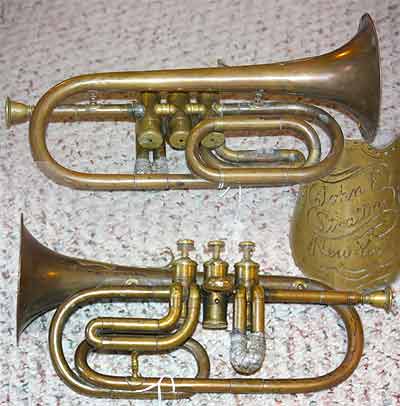 |
||||
| pumpen valves | |||||||
| 8124 | Tuba | Stratton | Eb LP |
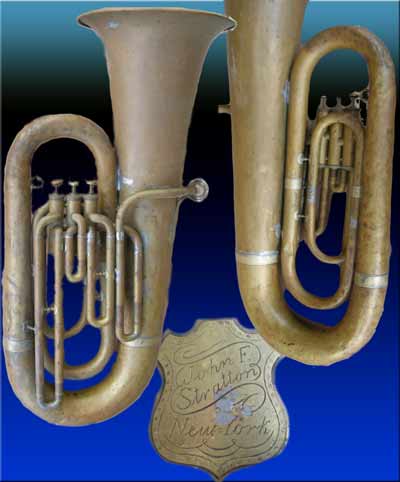 |
|||
| Height: 32.5in Bbell: 12in Valves stamped 31, 32, and 33. | |||||||
| 7202 | Baritone | Stratton |
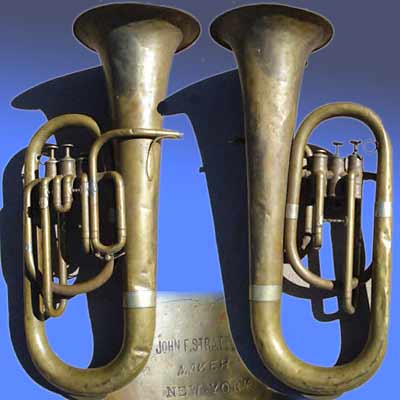 |
||||
| Height: 26 in Bell: 9 in | |||||||
| 6057 | Alto Horn | Stratton |
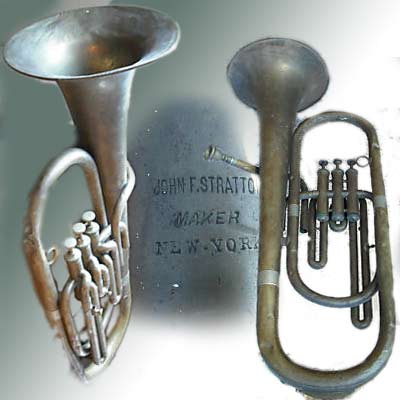 |
||||
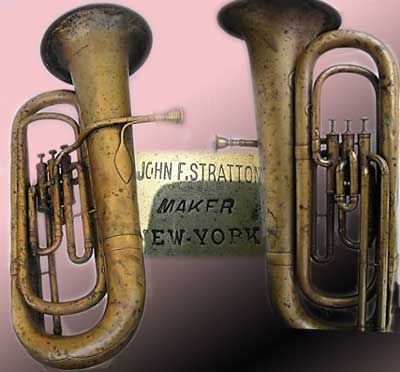
| 5468 | Tuba | Stratton |
 |
||||
| Height: 30in | |||||||
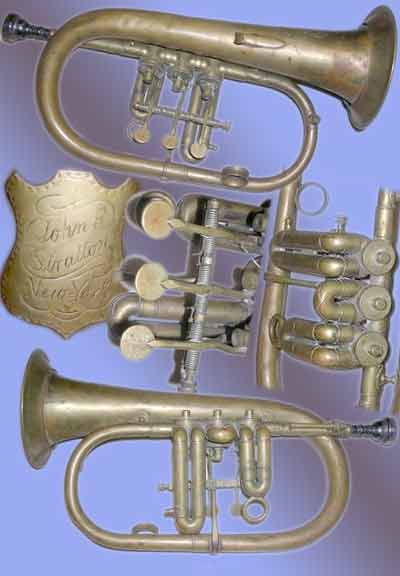
| 4478 | Cornet | Stratton | Eb |
 |
|||
| Length: 11 1/2in Bell: 4 3/8in | |||||||
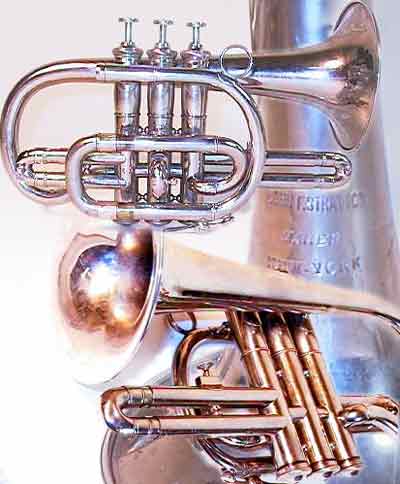
| 4336 | Cornet | Stratton | C HP |
 |
|||
| Engraved: John F. Stratton Maker New-York bore: .455 Bell: 5in | |||||||
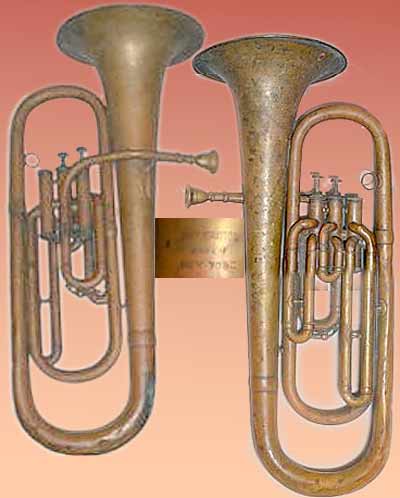
| 4201 | Tenor Horn | Stratton |
 |
||||
| Engraved: JOHN F STRATTON MAKER NEW YORK Length: 24in Bell: 8-3/4in | |||||||
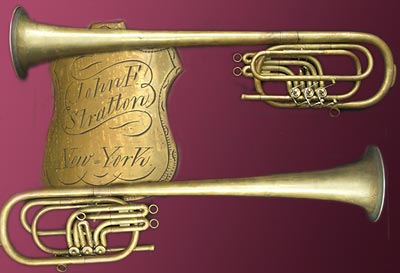
| 4182 | Tenor Horn | Stratton |
 |
||||
| Bell: 7in Length: 36in Bore: 494 (another had a bore of 497) | |||||||
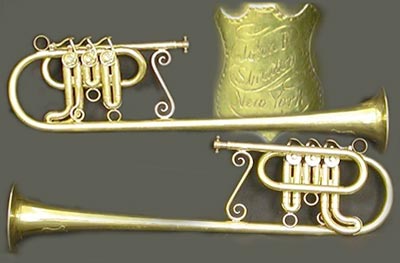
| 3980 | Cornet | Stratton | Bb |
 |
|||
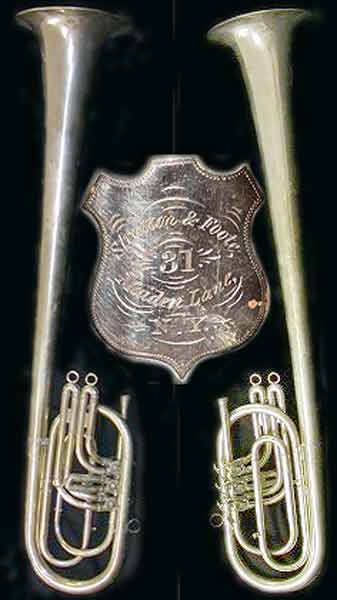
| 3974 | Saxhorn | Stratton |
 |
||||
| OTS Tenor | |||||||
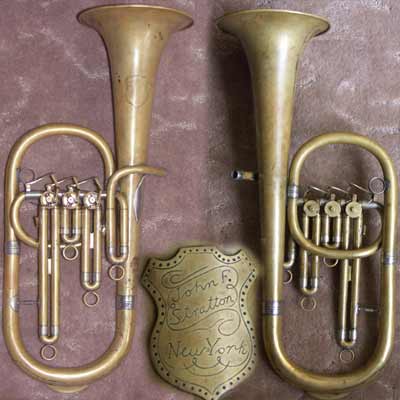
| 3924 | Alto Horn | Stratton |
 |
||||
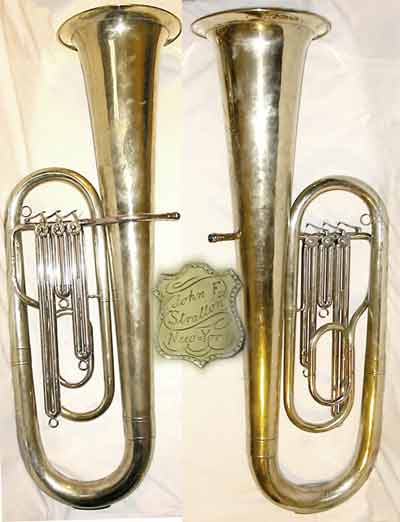
| 3821 | Saxhorn | Stratton |
 |
||||
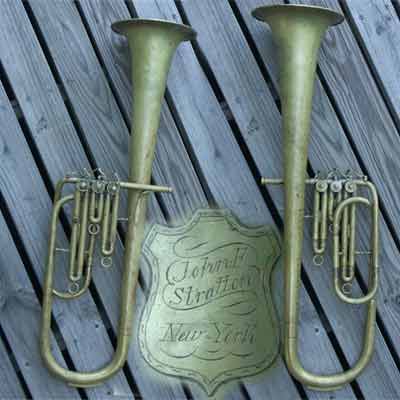
| 3817 | Saxhorn | Stratton |
 |
||||
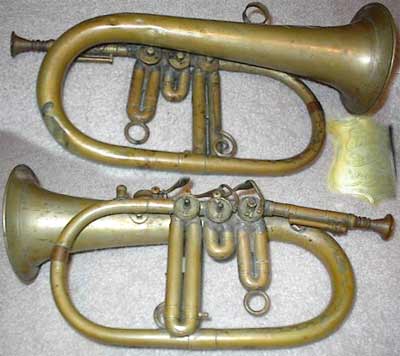
| 3788 | Cornet | Stratton |
 |
||||
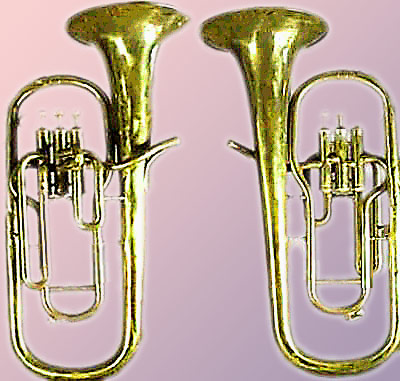
| 3468 | Alto Horn | Stratton | 1895-1912 |
 |
|||
| Engraved: JOHN F. STRATTON/MAKER/NEW YORK | |||||||
| 2972 | Cornet | Stratton | Eb |
 |
|||
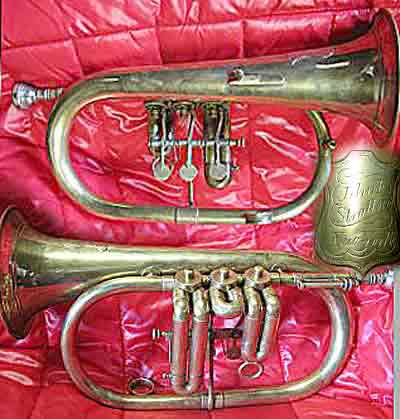
| Kenton: Looks to me to be post Civil War. The Civil War Strattons I have seen were TARV.
Possibly a horn Stratton made while in Germany? Pryorphone: My experience also. What can be seen of the makers badge looks like the New York Stratton badge, but I have never seen vertical valves with this kind of action. SATARV!? BARV!? (Bottom Action Rotary Valves) Peter: The valve cluster is typical of instrument of the later half of the 19th century. However, there are indeed features that are not typical. The keys in the shape of coins rather than paddles are not typical. The superstructure holding the keys is not typical. The bent tubes is very unexpected. The extra trigger-like key (?) is also not typical. It is almost as if someone got hold of an instrument and altered it. Either that, or this horn is a Stratton experiemental instrument. More research is surely in order on this odd instrument. Kenton: A couple of other opinions, I have collected "Interesting the way he took a standard top action cornet(valved bugle) and made it side action." [The horn is similar to the CW vintage horns in that] . . bore size remains rather large, garland etc. All of the hardware is familiar to me as Stratton except the finger pads/mechanism. " [Possibly] . . . this was done by another horn repair shop at a different time. "Mechanical linkage?? That would support the German mfg. Wide bore bugle early E flat with the tuning vernier –odd with the way the valve tubing is arranged. Stratton would not have entered my mind if it had not been marked. He was usually much more refined in his bracing etc. These valves and levers almost look like an afterthought." KimC: One thing that makes me wonder, and think this instrument was rebuild to its current appearence, is that appearently the first and third valve loops seems too long, compared to the second loop. As if he who rebuild the instrument, and added the 90° bends to the 1 and 3rd valve loops forgot to remove a similiar length of tubing that these angles make out. Imagine that you remove thise angles, and put the loops back "in place". They would most likely get the right length compared to the second loop. You would say that the player would notice such a mismatch! Do not wonder about anything! I have seen instrument that you would say impossible to play on - being played on. I know one case where a fella played a valve trombone, where the 3 rd valve was one of these that lowers two fulltones. When I told him, he just shrug his shoulders and sain "oh? I never noticed" Pryorphone: On the other hand, the bells in the way of what would normal TARV action. Then again, is not the tuning slide microtuning adjustment usually to the bottom of the horn, not the side? Kenton: It is in the normal SARV position, And the microtuner would go down. Pryorphone: Yes, but if they were turned the normal way for side action (with the valve slide openings to the side) the valves are upside down, and the bell would then interfere with the opening and removal of the valves! (likewise any connection or adjustment!) The bell bows do not leave any room for anything but overlap, either. KinC: Often Germaninspired instruments have a soft S curve on the main pipe right in front of the third valve. That curve also goes a little "downwards" same time, making the distance to the bell larger, and allowing a good hold of theinstrument. And the vavles, if they were originally arranged for side action, would be accessible from both sides. Smoothing that curve out would not be too dificult, and could be made without leaving tracks. The overall impression of the instrument looks like good craftmansship, except for the miscalculation of the altered valve loops. It is still my opinion that this instrument did not leave the manufacturer the way it looks now. It then encountered a frankenhorn maker with good skills in metal working, but less in calculating. My guess.... Kenton: Wiwinn has provided more detailed pictures of the valves: hornman: Actually, this is not a Frankenhorn--this is the way this horn was originally built and left the factory. I have seen two other virtually identical Strattons with this same valve cluster/key configuration. I had the opportunity to play one of them at the last Civil War Band Festival in Campbellsvill, KY in 1993. It was a very good player, and anyone who has played Strattons knows how inconsistent they can be. I believe it is from the 1870s; there may very well be a similar instrument in this image of Strattons exhibit at the 1876 Centennial Exhibition in Philadelphia: I think you will find that the valve tubes are the correct length (although they are pulled out a bit in the pics.) Overall a very unusual and interesting instrument, but by no means a Frankenhorn. wardsd: Definitely not a Frankenhorn. I own one exactly like this, only mine is Nickel. |
|||||||
| 2704 | Trumpet | Stratton | Streamliner | R5990 |
 |
||
| 2600 | Cornet | Stratton |
 |
||||
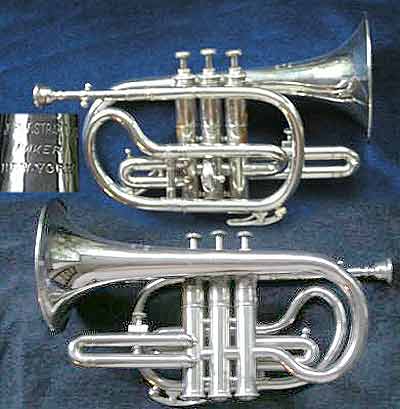
| Seller suspects it is an import | |||||||
| 1631 | Cornet | Stratton |
 |
||||
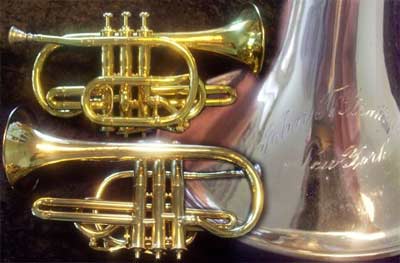
| 5 in bell 12 1/2 in long | |||||||
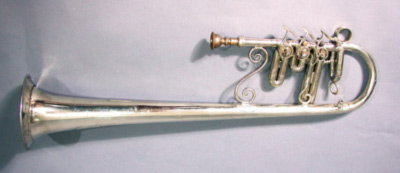
| 1569 | Cornet | Stratton | OTS | 1865 | Eb |
 |
|
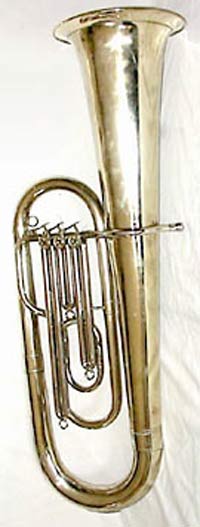
| 1029 | Tuba | Stratton | 1868 |
 |
|||
