| ID |
Instrument |
Maker |
Model |
Serial# |
Manuf. Date |
Key/Pitch |
Click on Picture to Enlarge |
| 10727 |
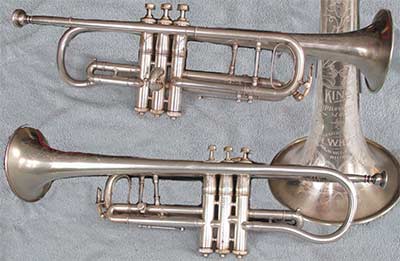
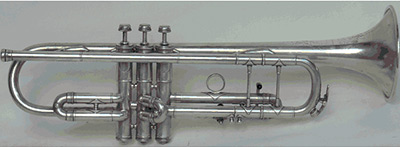
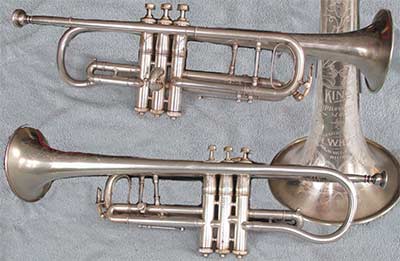
Trumpet |
King |
Improved |
9679 |
1911 |
|
 |
|
|
| 10660 |
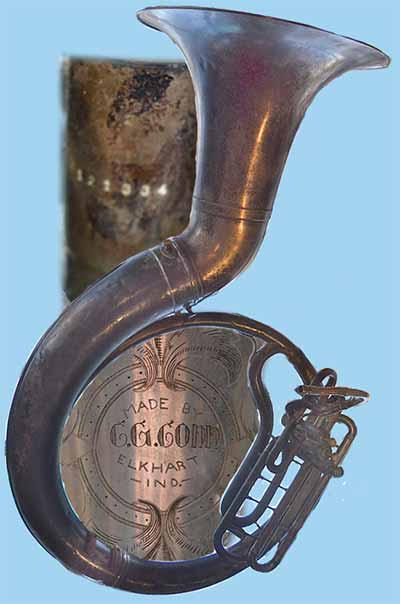
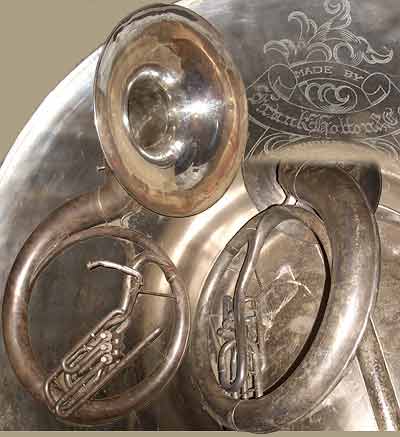
Sousaphone |
Conn |
|
121334 |
1911 |
Eb HP/LP |
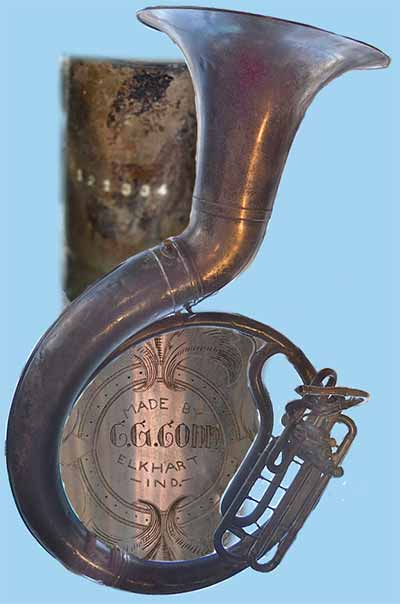 |
| Bell: 19in
Bore: .68
|
| 10579 |
Baritone; DB |
Conn |
Perfected |
119591 |
1911 |
|
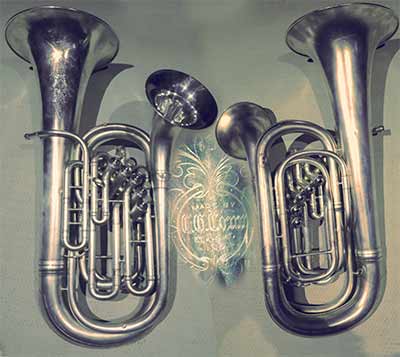 |
| Bells 11in/6in
|
| 10515 |
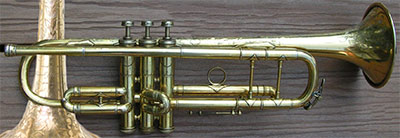
Trumpet |
Holton |
|
|
1911 |
HP/LP |
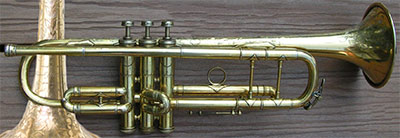 |
|
|
| 10514 |
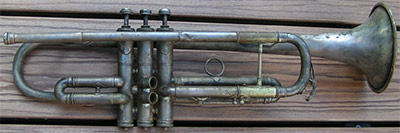
Trumpet |
Holton |
|
|
1911 |
LP |
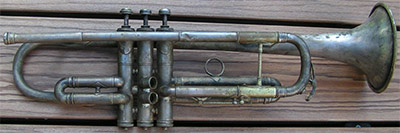 |
|
|
| 10398 |
Trumpet |
Holton |
|
|
1911 |
|
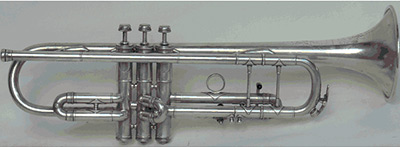 |
|
|
| 8924 |
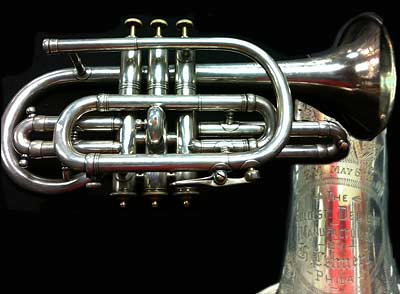
Cornet |
Lehnert |
Soloist Delight |
|
1911 |
|
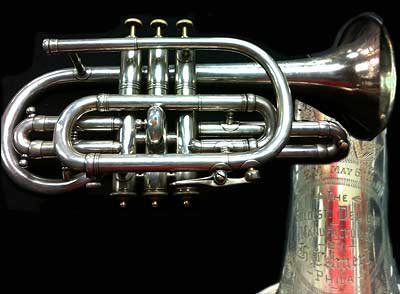 |
|
|
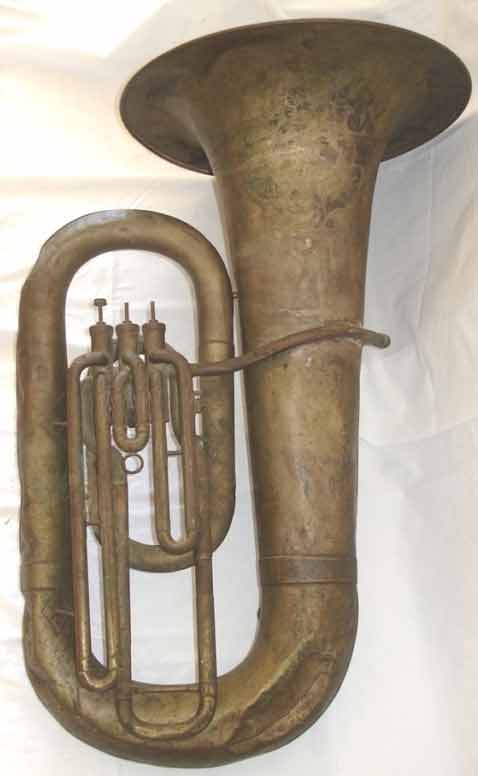
| 8865 |
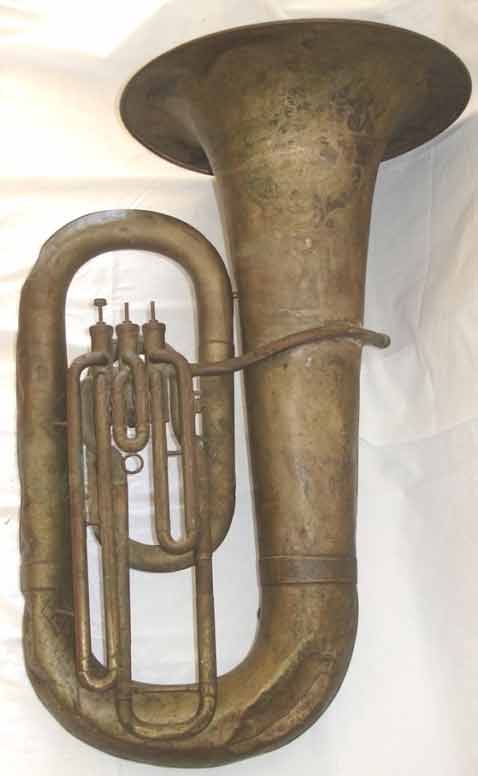
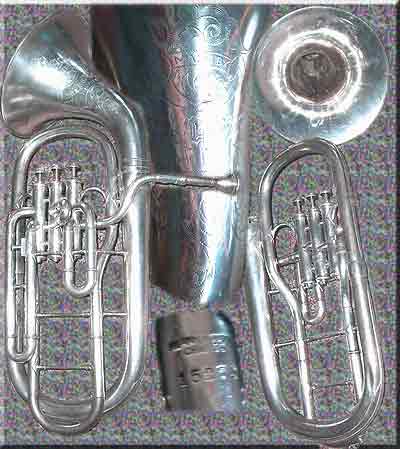
Tuba |
Buescher |
68 |
15275 |
1911 |
Eb |
 |
| Image used courtesy of cgmusic
|
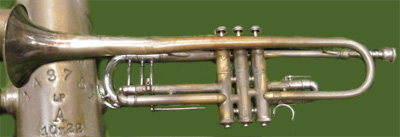
| 8404 |
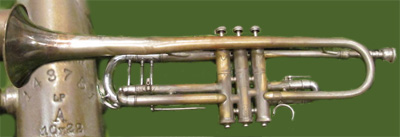
Trumpet |
Buescher |
10-22 |
143751 |
1911 |
|
 |
|
|
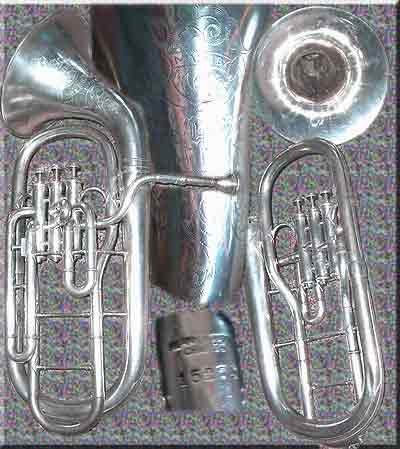
| 7746 |
Alto Horn |
Holton |
|
152xx |
1911 |
|
 |
|
|
| 7404 |
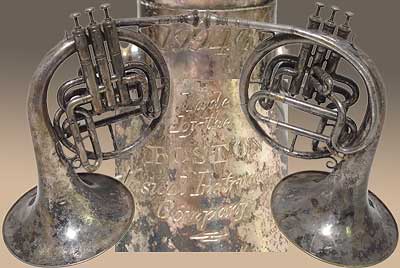
Mellophone |
Boston |
|
19946 |
1911 |
|
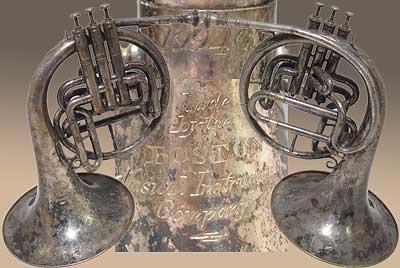 |
| Engraved:Made by the Boston Musical Instrument Company
bell: 10.25in
|
| 7285 |
Sousaphone |
Holton |
|
|
1911 |
Eb |
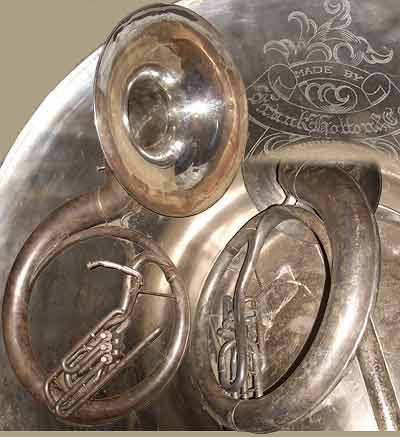 |
|
|
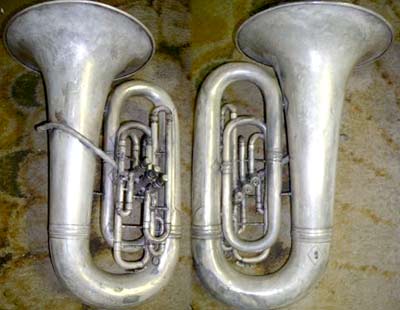
| 4790 |
Tuba |
York |
51 Monster |
28789 |
1911 |
Eb |
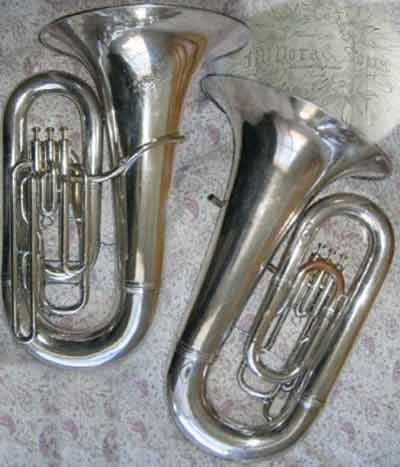 |
| Engraved: Made by J.W. Yorks & Sons. Grand Rapids Mich
Bell: 19.5 in
Height: 31 in
|
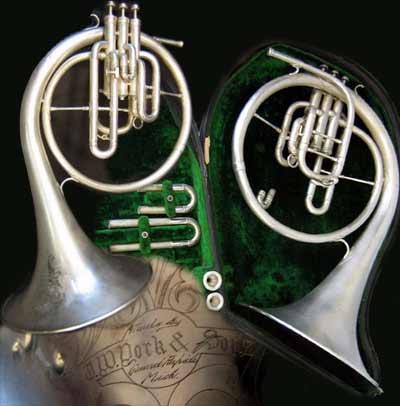
| 4155 |
Mellophone |
York |
|
25724 |
1911 |
|
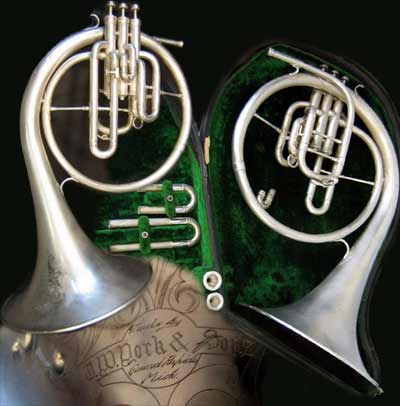 |
|
|
| 4152 |
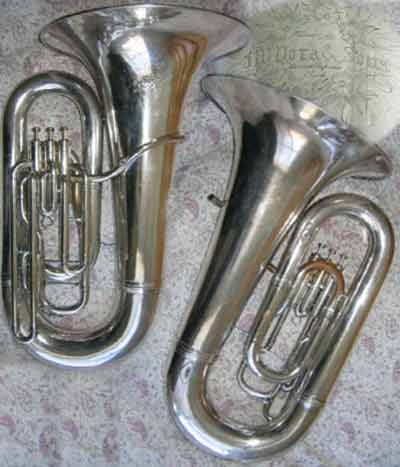
Tuba |
York |
|
26838 |
1911 |
Eb |
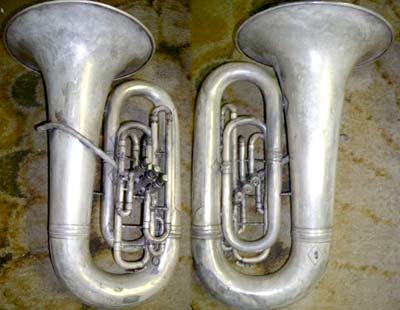 |
| Bell: 19in
Height: 32in
|
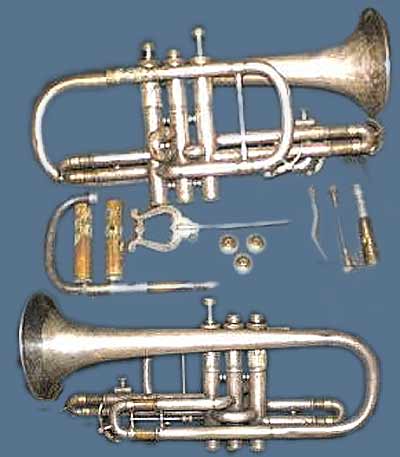
| 4147 |
Cornet |
Buescher |
|
154xx |
1911 |
|
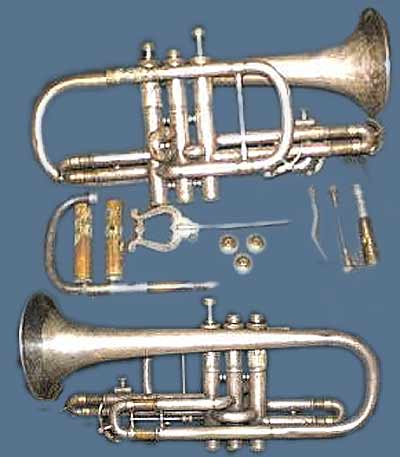 |
| Pat Oct 29 07 Elkhart, IN
Below the serial # are the words PAT MCH 19 1901
|
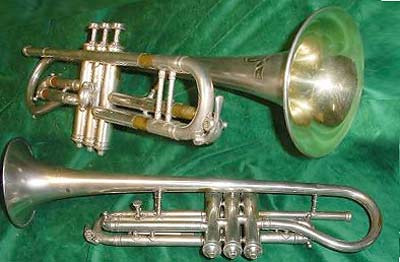
| 4050 |
Trumpet |
York |
|
28466 |
1911 |
|
 |
|
|
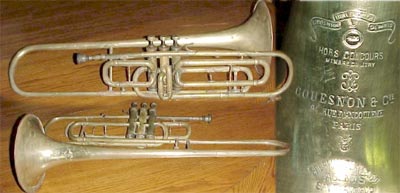
| 3777 |
Trombone; Valve |
Couesnon |
|
|
1911 |
|
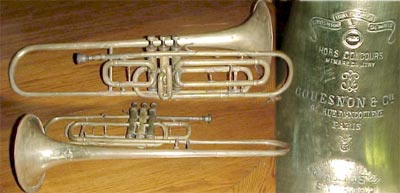 |
| Exposition Universelle De Paris
|
1900
|
Hors Concours
|
Member Du Jury
|
Couesnon & Cie
|
94 Rue DAncouleme
|
Paris, France
|
Sherman & Clay Agents
|
San Francisco
|
11 inside of pineapple
Bell: 8in
Length: 26in
|
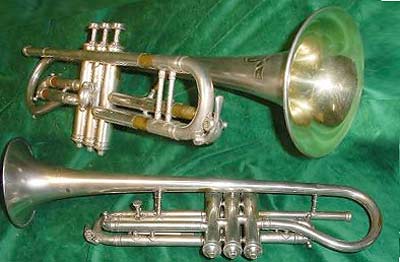
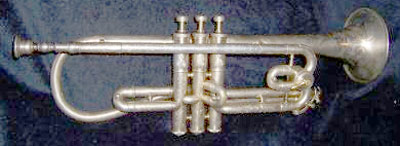
| 3761 |
Trumpet |
Buescher |
No 5 Epoch |
14930 |
1911 |
Bb/A |
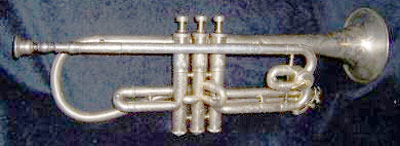 |
| Patented in Mich. in 1919
Pryorphone: The No. 5 trumpet has the Epoch system. In addition to the high 2nd valve slide, you can also see that the bell tubing exits from the 2nd valve on the other side.
I assigned it to 1911 based on Lars Kirmsers serial number chart from the number given. I have no idea idea of any Buescher patent in 1919. The Epoch valve system was 1901, "Multi-Pitch Tuning" was 1906, and the "Split-No-Tone Bell", which was on their trumpets and cornets into the 20s was 1907, so I have no idea where the 1919 date comes from.
|
| 2669 |
Alto Horn |
York |
|
28945 |
1911 |
|
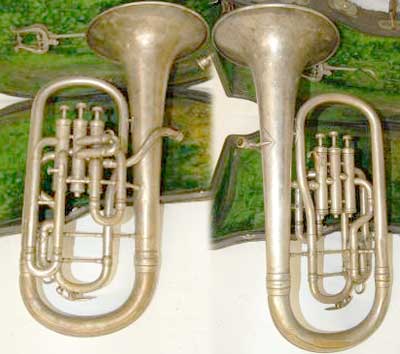 |
| Height: 20in
bell: 8 in
|
| 1429 |
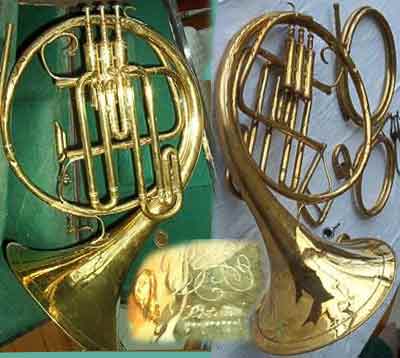
French Horn |
Boosey |
|
83399 |
1911 |
|
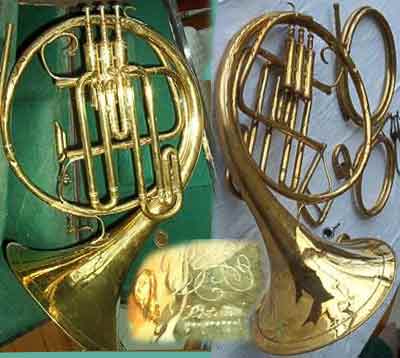 |
| engraved: Boosey & Co. Makers London 83399.
|
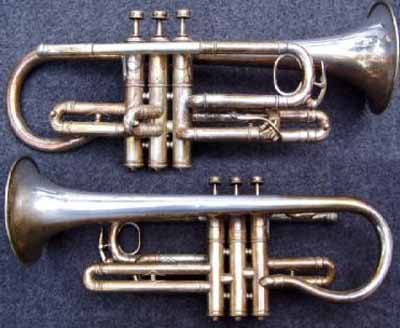
| 979 |
Cornet |
Holton |
Couturier |
13359 |
1911 |
|
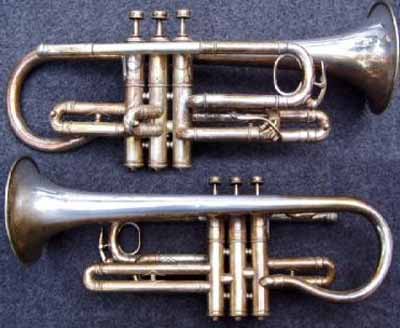 |
| Engraving: COUTURIER MODEL
NEW PROPORTION
MADE BY
FRANCK HOLTON
CHICAGO
Biber: It seems a little unclear to me as to what distinguished the Clarke model from the plain new proportion model and the couturier model. Was it just bore size? I have seen ads showing Clarke model instruments both with and without shepherds crook. Surely Clarkes customization of the model was more than bore size.
Pryorphone: The cornet stayed the same regardless of who was endorsing it (and whos name they put on it).
There were times when"New Proportion" model was made with was no endorsing artist: 1907 to some of 1909 and some of 1912 to at least 1918.
I know of "Couturier Model" New Proportions with 0, 0-, 0½, and 1 bores, so it would be my assumption that this worked the same way when Clarke endorsed them.
From 1918 on, the cornet was known as the "Holton-Clarke Model"
I have not tracked anything beyond Chicago, so I can not tell you any more than that.
OLDLOU: I have two Holton Clarke Model cornets from about the same era. One is a shepherds crook type, which is appreciably shorter than the other, which is a typical extended cornet design. this just might answer the question per the Holton Clarke or Couturier, or, New Proportion short cornets. One of the major differences that I have noted in these two old horns is that the shepherds crook model will not fit into the original factory case for the non s c design. A minor difference is that the shepherds crook model will accept a modern Bach type cornet mouthpiece shank, whereas, the non s c horn has a much smaller diameter i.d. in the receiver.
Biber: as the New Proportion design or its other incarnations (Clarke, Couturier) ever offered as a trumpet or trumpet-shank instrument? the reason I ask is that I just saw a publicity photo of the fortmer child prodigy trumpet soloist Edna White. the photo was easily from the 1940s (eitherway considerably after her switch from cornet to trumpet) and showed her holding what I am almost 100% sure is a Holton-Clarke cornet.
Kenton: The Couturier line had a trumpet. Though it is really pushing it to call it a trumpet. i.e. a trumpet is supposed to be cylindrical until it goes into the bell branch. Course, no modern trumpets do fit this description. But the Couturier model took this to an extreme. It took a trumpet shank mouthpiece but was conical throughout.
I would be surprised if Clarke endorsed a trumpet. He was very vocal in opposition to the trumpet over the cornet.
|
| 581 |
Cornet |
Besson |
|
95103 |
1911 |
|
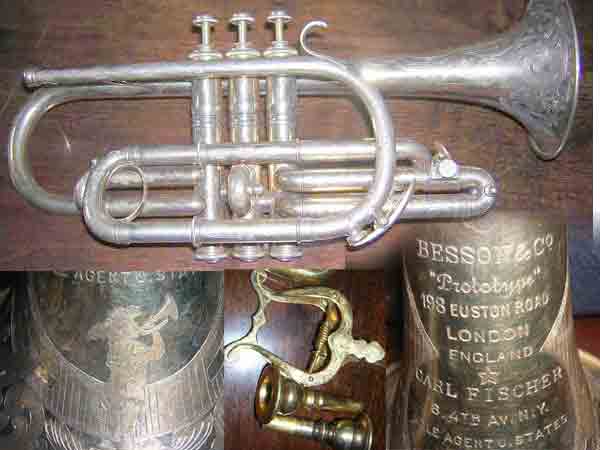 |
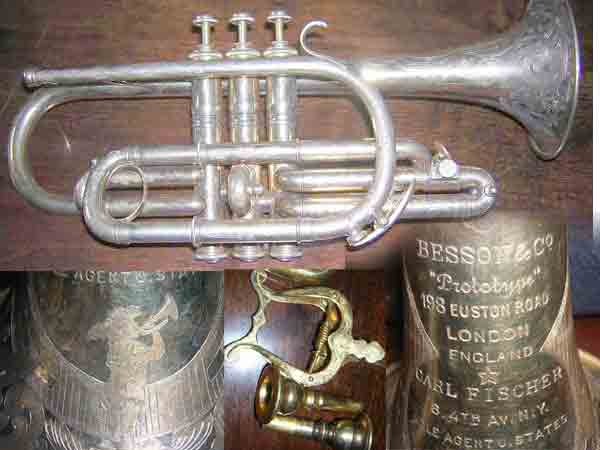
| Owner says this horn may never has been played. "The instrument looks like its gold-plated, I swear.
It may be brass, but there is no tarnish anywhere, and it has never been cleaned or even taken out of the box in 40 years, so its hard to believe it wouldnt tarnish on its own! One of the valves is engraved: Besson & Co./Brevete/95103. The horn is engraved: Class A/New Creation/Besson & Co./Prototype/198 Euston Road/London, England/Carl Fischer/6 4th Ave., New York/Sole Agent to States. There is a "Gibson Girl" engraved on the horn area, as well as a bugler boy by the edge of the rim."
|