| ID |
Instrument |
Maker |
Model |
Serial# |
Manuf. Date |
Key/Pitch |
Click on Picture to Enlarge |
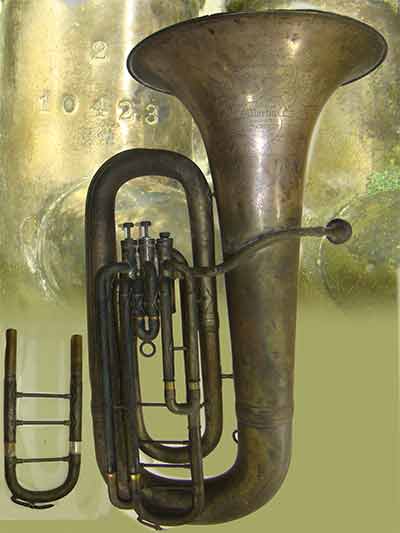
| 11421 |
Tuba |
Martin |
|
10423 |
1913 |
Eb HP/LP |
 |
| Bell: 17in
|
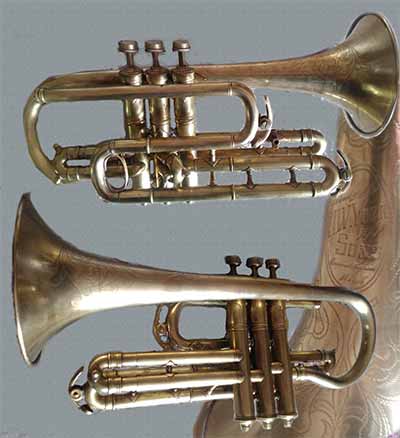
| 11412 |
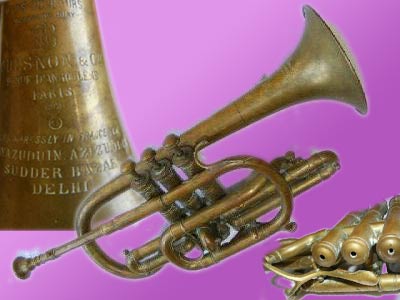
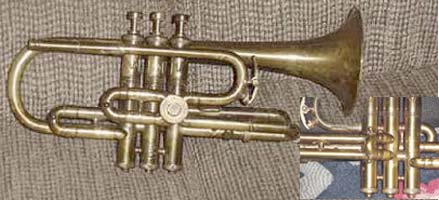
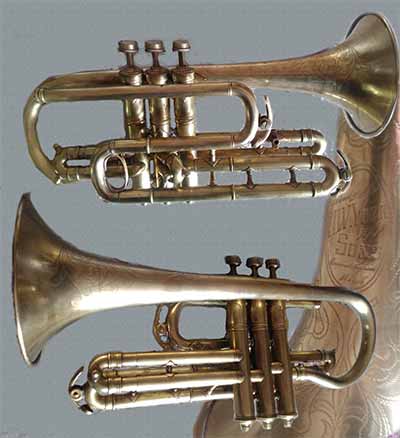
Cornet |
York |
|
35867 |
1913 |
C/Bb/A |
 |
|
|
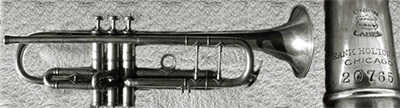
| 10399 |
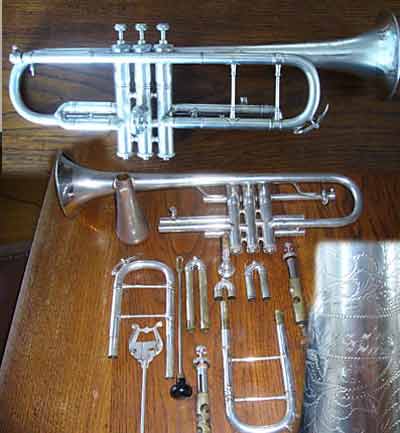
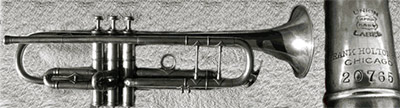
Trumpet |
Holton |
|
|
1913 |
HP/LP |
 |
|
|
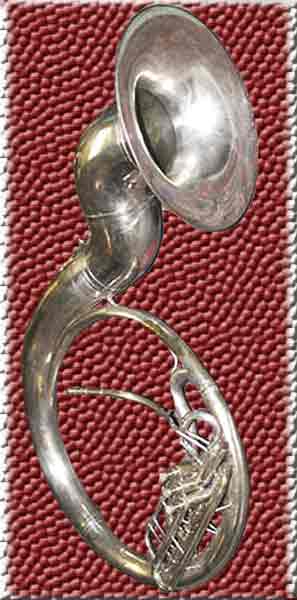
| 10176 |
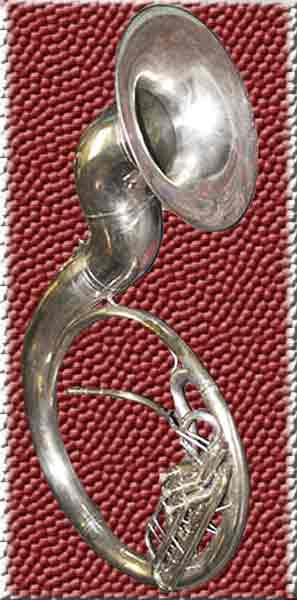
Sousaphone |
Conn |
Wonderphone Standard |
130866 |
1913 |
Eb |
 |
| Bell: 17in
|
| 10027 |
Baritone |
Conn |
|
130075 |
1913 |
|
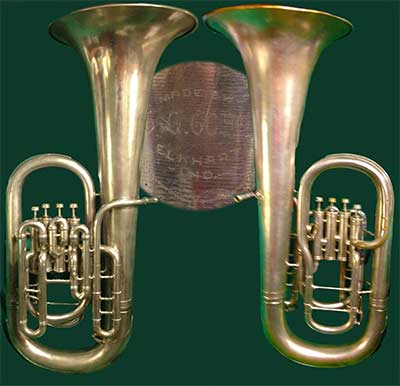 |
| 4 Pistons up, pre-tune,
bell: 11in up
Height: 28in
Bore: 0.567
|
| 9914 |
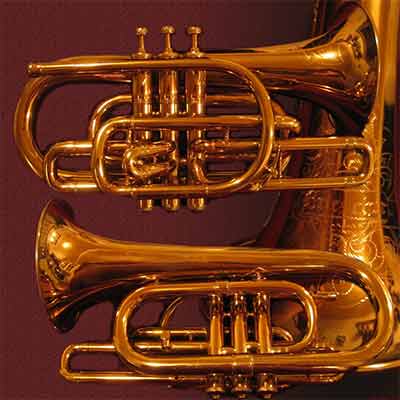
Alto Horn |
Buescher |
20 |
21689 |
1913 |
|
 |
|
|
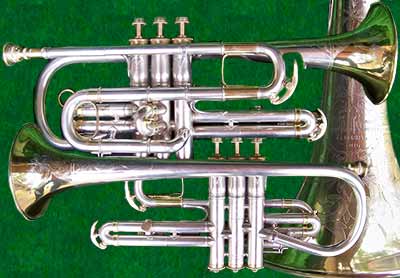
| 9495 |
Cornet |
Conn |
New Invention Circus Bore |
|
1913 |
|
 |
|
|
| 9193 |
Cornet |
York |
Couturier Wizard |
10012 |
1913 |
|
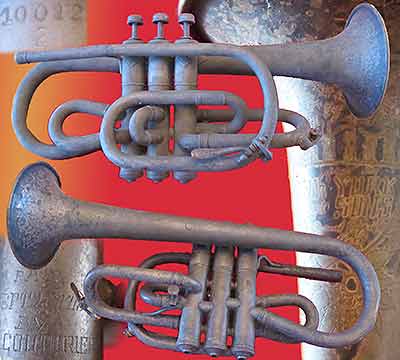 |
| Patent Sept 23, 1913
|
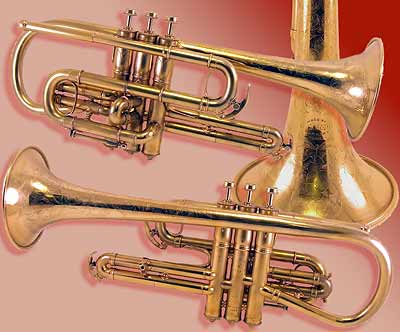
| 8585 |
Cornet |
Conn |
New Invention |
|
1913 |
|
 |
|
|
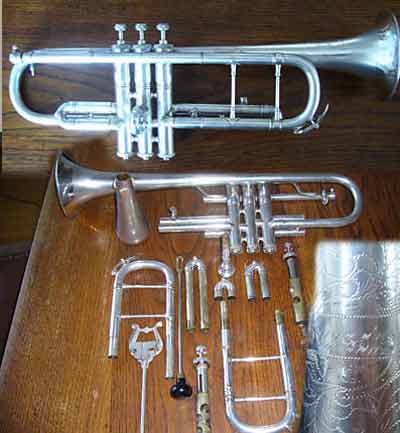
| 5488 |
Trumpet |
Buescher |
|
|
1913 |
|
 |
|
|
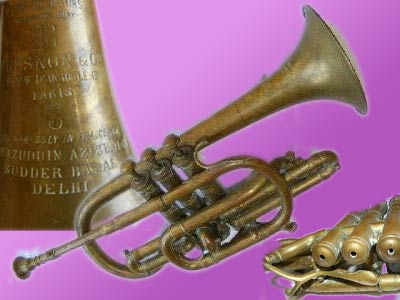
| 5310 |
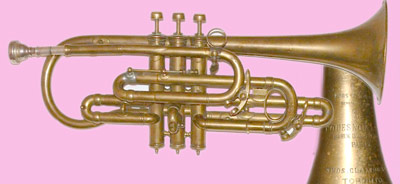
Cornet |
Couesnon |
|
|
1913 |
|
 |
|
|
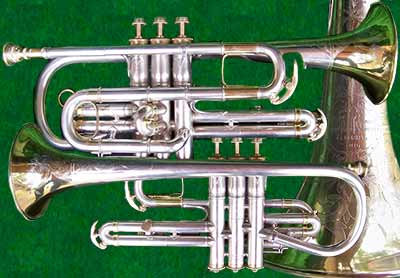
| 3908 |
Cornet |
Couesnon |
|
|
1913 |
|
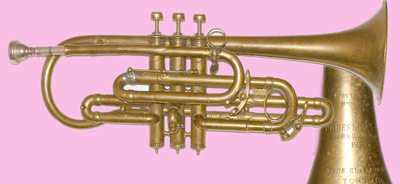 |
| Engraved: Excelsior Perficere | Exposition Universelle de L’Art 1900| Hors Concours| Membre du Jury | Thos. Claxton Ltd. | Toronto
Claxton retired in 1911, but the store operated under different management through 1931.
|
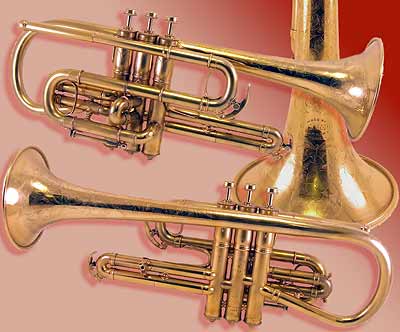
| 2260 |
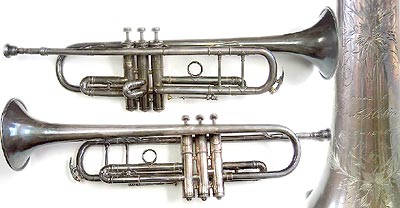
Trumpet |
Holton |
|
23970 |
1913 |
HP/LP |
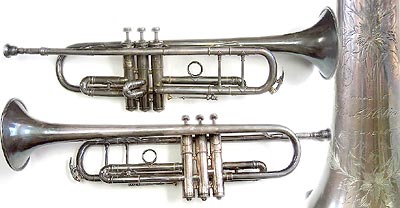 |
| Engraved: Made by Frank Holton Chicago.
Configured for LP
It has a 1898 patent held by John Heald
Stamped on valves: Union Label MPBP B&SW - Frank Holton & Co. Chicago 23970.
The Union Label mark was for the Local 355 of the "Metal Polishers, Buffers, Platers, Brass Moulders, Brass and Silver Workers International Union of North America".
|
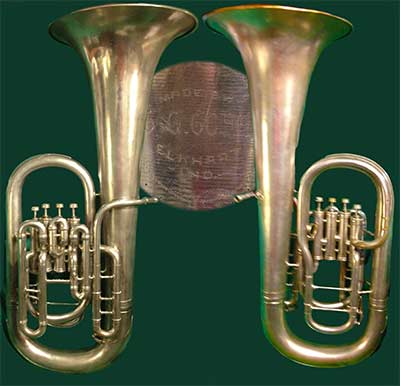
| 858 |
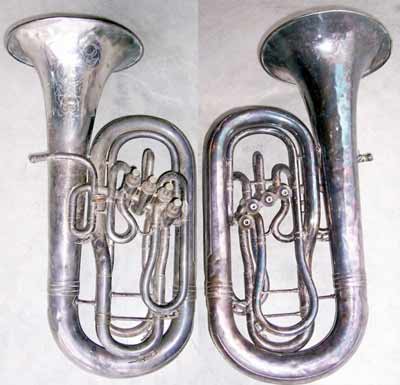
Euphonium |
Couturier |
|
|
1913 |
|
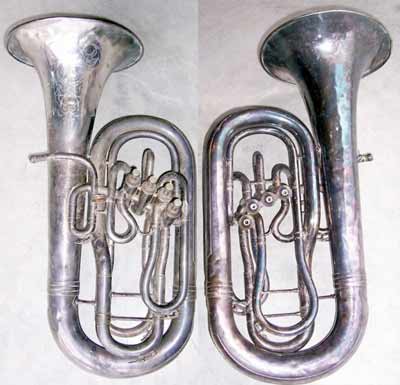 |
| Couturier 4 Valve Silver
On the bell it says, "Conical Bore".
|
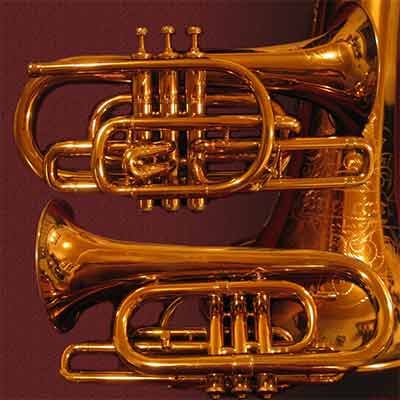
| 396 |
Cornet |
King |
Vocal 1060 |
41698 |
1913 |
C |
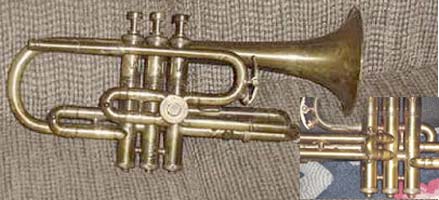 |
| Rotary valve changes key from Bb to C
|
| 354 |
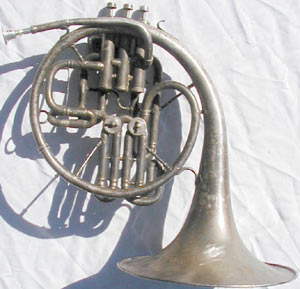
Mellophone |
York |
|
|
1913 |
|
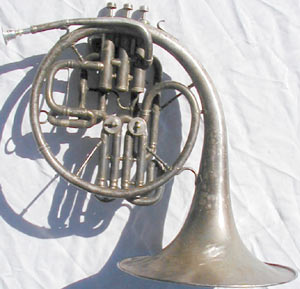 |
| three pistons for playing and two additional rotary keys for lowering the pitch, allowing this instrument to play in the keys of F/Eb/D/C.
Instruments of this sort usually came with two mouthpieces, one mellophone/Eb tenor horn size for playing in F and Eb, and one baritone/euphonium/tenor trombone size for playing in D/C.
It may have originally come with an extra set of valve slides.
This particular version of the hybrid instruments refered to as mellophones was also often refered to as a tenor cor. The tell-tale features are: slightly smaller bell, noticeably narrower bell-throat, cornet/trumpet valve casing and bore-size.
This particular form of mellophone, for whatever reason, was the perennial favourite of African-American brass and concert band musicians during the entire Ragtime era in the United States, and would have been used by such musicians as those that played in the bands of Ragtime composer and bandmaster James Reese Europe.
|