Re: Effect of mouthpieces I had noticed a similar effect regarding mellophones about a decade after this post's date. I was trying different marching mellophone and mouthpiece combinations, and was trying to find ways to make the Olds/Reynolds/Bach Mercedes/King/Blessing designs with a "flatter" bell/fast flare a bit less...harsh...without buying three-figure mouthpieces new or destroyed used ones.
None of this was very scientific, but just a neat comparison process.
You had some French horn players wanting a better mouthpiece than their usual horn piece/adapter, some wrecked Mello 6, or random trumpet mouthpieces. I had read about using alto/tenor horn mouthpieces as well, and I found the Blessing 5 was a good match for the fast flare mellophones. They were also easy to acquire for $25-40 in new or good-used condition.
The Jupiter [Yamaha-esque] models with a slower flare [slightly more like a French horn bell] did not respond as well to the alto/tenor mouthpiece setup. I can't find the best English words to describe the effect, but the pitch center disappeared [you could no longer "lock into/onto" pitches, the intonation then became extremely uneven, and the tone quality became strained no matter how you adjusted your lips, mouth, breathing, etc. The Jupiter/Yamaha models played and sounded best with "moderate" designs like the Mello 6, Schilke 11E, Bach 5A, etc. I chalk it up to the bell design [so far] but I sold that test horn a while ago.
For a neat aside, I attached cross-section scans of the Denis Wick 5 [red] and Blessing 5 [green] mouthpieces in VennCAD - the Blessing has a slightly higher throat shoulder but is otherwise very similar. Adding the modern Jupiter Alto Horn model [cyan] shows it is very similar to the Wick, but with a different rim [far less comfortable than the other models!]. The three also have somewhat different frequency responses as well. I would recommend VennCAD for mouthpiece comparison tools!
Books
Instrument Characteristics Topics
Mouthpieces Posts
Re: Productline Methodogy Great - so I can get a head start on cropping Amati images...
The image size is limited to 400 w x 600 h
Glad to have that spec requirement. Does that also apply to the ProductLine images? - since it references Database images, N/A.
I ask since "art" or not, if the details are destroyed by high-compression, low-resolution images, it can make identification difficult [devil is always in the details].
Now I know which image shots to optimize for the composite.
Why composite?
is an example of where it might help to show part of the cup, since the exterior is the same as several other designs of the era.
Another potential tool could be to link to 2D tracing/3D model, like having
https://trumpet.cloud/mpc/index.html?mpc1id=VA913435
https://trumpet.cloud/mpc/3d/index.html?mpc3D=Trumpet-WM_Frank_Co_21&type=stl&name=WM%20FRANK%20CO%2021&Xoffset=-0.3
in the description of
- with the caveat that the scan specimen and image subject are probably not the same piece.
Doesn't have to be Trumpet.cloud - it can be Internet Archive, Cults3D, etc. especially for models that aren't eligible for Trumpet.cloud.
in the case of pieces I've had scanned, I can guarantee the images and 3D models correspond to the same specimen.
That reminds me...detailed specs on the scan subjects are at https://trumpet.cloud/mpc/specs/vcdata.pdf
Heck, while I'm at it - any problem with an Amati-Kraslice/Lignatone product line? Since we now have catalog images and numbers, that makes the job easier...
OK, regarding the mouthpieces, let's group discuss this. The overall design of the images on this site have been intended to provide enough detail to be useful in identifying instruments in the real world, without trying to "make art", or provide a detailed example of a particular example. The image size is limited to 400 w x 600 h.
And, there is some value in having consistency across our images. There may have been some images that have displayed composites of different view of a mouthpiece. I can't really remember if that has been the case or not. I know I've considered it on occasion, but can't recall if I ever went through with it.
I certainly don't have a problem with expanded presentations on mouthpieces in the main body of the forum. Though, I'm ambivalent about whether the mouthpiece table might suffer from too much data. I'm undecided, so I'd like others to share their perspective.
________________________________
Regarding the Amati line, I think that would be worthy project. Windshieldbug and I have developed a method for defining instruments in the table. I would like to continue that approach. However, I think it would be helpful if I explained better on the input screen some of that for reference. And, we don't have to let the table go public until it is better populated, that way any bugs/issues can be worked out.
The image size is limited to 400 w x 600 h
Glad to have that spec requirement. Does that also apply to the ProductLine images? - since it references Database images, N/A.
I ask since "art" or not, if the details are destroyed by high-compression, low-resolution images, it can make identification difficult [devil is always in the details].
Now I know which image shots to optimize for the composite.
Why composite?

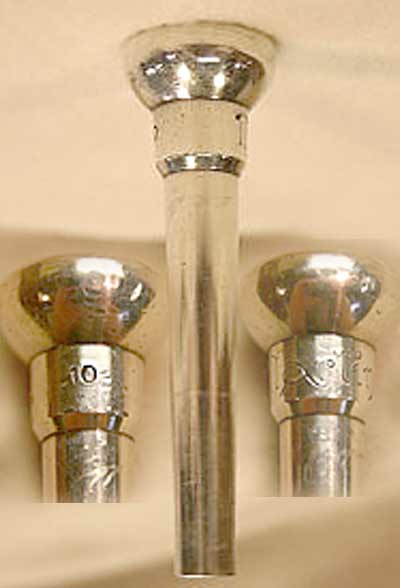
is an example of where it might help to show part of the cup, since the exterior is the same as several other designs of the era.
Another potential tool could be to link to 2D tracing/3D model, like having
https://trumpet.cloud/mpc/index.html?mpc1id=VA913435
https://trumpet.cloud/mpc/3d/index.html?mpc3D=Trumpet-WM_Frank_Co_21&type=stl&name=WM%20FRANK%20CO%2021&Xoffset=-0.3
in the description of

- with the caveat that the scan specimen and image subject are probably not the same piece.
Doesn't have to be Trumpet.cloud - it can be Internet Archive, Cults3D, etc. especially for models that aren't eligible for Trumpet.cloud.
in the case of pieces I've had scanned, I can guarantee the images and 3D models correspond to the same specimen.
That reminds me...detailed specs on the scan subjects are at https://trumpet.cloud/mpc/specs/vcdata.pdf
Heck, while I'm at it - any problem with an Amati-Kraslice/Lignatone product line? Since we now have catalog images and numbers, that makes the job easier...
OK, regarding the mouthpieces, let's group discuss this. The overall design of the images on this site have been intended to provide enough detail to be useful in identifying instruments in the real world, without trying to "make art", or provide a detailed example of a particular example. The image size is limited to 400 w x 600 h.
And, there is some value in having consistency across our images. There may have been some images that have displayed composites of different view of a mouthpiece. I can't really remember if that has been the case or not. I know I've considered it on occasion, but can't recall if I ever went through with it.
I certainly don't have a problem with expanded presentations on mouthpieces in the main body of the forum. Though, I'm ambivalent about whether the mouthpiece table might suffer from too much data. I'm undecided, so I'd like others to share their perspective.
________________________________
Regarding the Amati line, I think that would be worthy project. Windshieldbug and I have developed a method for defining instruments in the table. I would like to continue that approach. However, I think it would be helpful if I explained better on the input screen some of that for reference. And, we don't have to let the table go public until it is better populated, that way any bugs/issues can be worked out.
Mouthpiece section: Martin 3 cornet, ca. 1910s-1920s Scan specs indicate it has a 0.6602" / 16.77mm inner diameter and 0.5608" / 14.24mm cup depth
Tracing overlay shows it's similar to [and deeper than] a Vincent Bach 10½A, and even closer to a custom Schilke 13D with deeper [E] cup
Tracing overlay shows it's similar to [and deeper than] a Vincent Bach 10½A, and even closer to a custom Schilke 13D with deeper [E] cup
M18 King [H N White] trumpet mouthpiece spec sheet Larger sheet combined from two scans
I found the internal spec version made later on - they kept elements of the shape [almost resembling some of the Conn UMI pieces], but other than marketing, I don't know...
Re: H2 French Horn mouthpiece diagram Looks like all the detail one would need to 3D print!
But, it would be interesting to know whether the outside dimensions - other than in the shank, and lip - are cosmetic, or whether they are also determined by function
But, it would be interesting to know whether the outside dimensions - other than in the shank, and lip - are cosmetic, or whether they are also determined by function
H2 French Horn mouthpiece diagram I think I have another couple around, but this has some neat specs
[Out of production] Trumpet, cornet, flugelhorn, mellophone mouthpieces
I figure I'd reiterate the https://trumpet.cloud/mpc/index.html
project, showing 2D line cross-sections and 3D renderings of trumpet, cornet, flugelhorn, and mellophone mouthpieces in the vein of Kanstul Mouthpiece Comparator, with additional pieces. The scans are usually from the Vennture.mp folks, with some from former Kanstul mouthpiece maker Jim New.
The CMM data in Vennture's "VennCAD" software and their proprietary modifications allow for 3D rendering.
Additionally, I was experimenting with the Internet Archive's ability to display 3D STL files, so we can see things like:
Reynolds [Olds] 16 - https://archive.org/details/Reynolds16trumpet
https://drive.google.com/drive/folders/1zS5k7xFpS8rZZmvyMQod7anUiG7Lgzk9
UMI Conn 10½CW - https://archive.org/details/Conn10HCWtrumpet
https://drive.google.com/drive/folders/1xvE04Yqb-lzpDEqKfOIWESSn1D7UOUlW
UMI Benge 1 - https://archive.org/details/Benge1trumpet
https://drive.google.com/drive/folders/1SgmtZeg-zLghV6ZDwo2Jnvi634shp9FS
1960s Conn "Fluegel" cornet-shank - https://archive.org/details/ConnFluegel1960s
Alto/tenor horn, trombone, tuba pieces would be neat on an equivalent site...
I figure I'd reiterate the https://trumpet.cloud/mpc/index.html
project, showing 2D line cross-sections and 3D renderings of trumpet, cornet, flugelhorn, and mellophone mouthpieces in the vein of Kanstul Mouthpiece Comparator, with additional pieces. The scans are usually from the Vennture.mp folks, with some from former Kanstul mouthpiece maker Jim New.
The CMM data in Vennture's "VennCAD" software and their proprietary modifications allow for 3D rendering.
Additionally, I was experimenting with the Internet Archive's ability to display 3D STL files, so we can see things like:
Reynolds [Olds] 16 - https://archive.org/details/Reynolds16trumpet
https://drive.google.com/drive/folders/1zS5k7xFpS8rZZmvyMQod7anUiG7Lgzk9
UMI Conn 10½CW - https://archive.org/details/Conn10HCWtrumpet
https://drive.google.com/drive/folders/1xvE04Yqb-lzpDEqKfOIWESSn1D7UOUlW
UMI Benge 1 - https://archive.org/details/Benge1trumpet
https://drive.google.com/drive/folders/1SgmtZeg-zLghV6ZDwo2Jnvi634shp9FS
1960s Conn "Fluegel" cornet-shank - https://archive.org/details/ConnFluegel1960s
Alto/tenor horn, trombone, tuba pieces would be neat on an equivalent site...
Re: Mouthpipe mandrel spec diagram - Benge Claude Gordon trumpet A 1987 sketch of mouthpipe mandrel dimensions Chuck Ward drew in 1987
Mouthpipe mandrel spec diagram - Benge Claude Gordon trumpet A bit off the beaten path, but I was able to compress the scan to attach here
Re: Effect of mouthpieces Today, most mouthpieces are standard sizes with a few deviations here and there, but I believe those deviations and variations were much more and bigger in those earlier times.
So yes, I agree the original mouthpiece is not necessarily always the best mouthpiece but to find a better replacement that fits can be a problem sometimes.
So yes, I agree the original mouthpiece is not necessarily always the best mouthpiece but to find a better replacement that fits can be a problem sometimes.
At some point, the mouthpiece that was supplied with most new instruments was considered no more than adequate, but not prime for the instrument and most players soon replaced it with something else that they preferred.
This was certainly the case in my life time of playing. (My first mouthpiece 'transplant' would have been about 1960.)
I suspect this was not always the case in earlier decades.
This was certainly the case in my life time of playing. (My first mouthpiece 'transplant' would have been about 1960.)
I suspect this was not always the case in earlier decades.
Re: Effect of mouthpieces Certainly, mouthpieces do make a lot of difference. I have many vintage instruments in my collection and many vintage mouthpieces. Unfortunately, I do not have a matching mouthpiece for all of my instruments. And there certainly are differences between the mouthpieces and mouthpiece receivers of the several instruments.
In short: not every vintage -insert instrument type, e.g. cornet- mouthpiece fits in every vintage -insert instrument type, e.g. cornet-.
So if the original mouthpiece is not included with the vintage horn, it is always a matter of trial and error to find a mouthpiece that fits, plays well and sounds good.
In short: not every vintage -insert instrument type, e.g. cornet- mouthpiece fits in every vintage -insert instrument type, e.g. cornet-.
So if the original mouthpiece is not included with the vintage horn, it is always a matter of trial and error to find a mouthpiece that fits, plays well and sounds good.
Re: Tracking Logos
When was the Conn Marching Men logo 1st used?
May 24th, 2023,
does anyone know when the Conn 3 marching men logo was 1st used?
Reply #1 - May 24th, 2023,
I have a photo of a guarantee card for trumpet #351940 dating to 1942 with the three marching men on it. The round brass case tag also has them.
Reply #2 - May 24th, 2023,
I found that the marching man image was first used on the cover of the 1930 Musical Truth magazine. Not in a group of three but rather many of them spread out over a field. The logo first shows up in advertising in 1931 with three players: trumpet, sax, and sousaphone.
As for when it first shows up on instruments, I don't know. After WWII.
Reply #4 - May 24th, 2023,
Wow didn't know they were using it that early. From my recollection the earliest I've seen it is on cases, then on the Directors in the 1950's is the earliest engraving I've seen.
Reply #5 - Jun 19th, 2023,
I recall a trademark application was filed in 1933, and it had been used in print material for a year or so prior [though it makes sense the motif was devised in 1930, then modified into the current form].
One Pan American logo variant looks to have the bugle/trumpet Marching Man motif as part of its logo.
When was the Conn Marching Men logo 1st used?
May 24th, 2023,
does anyone know when the Conn 3 marching men logo was 1st used?
Reply #1 - May 24th, 2023,
I have a photo of a guarantee card for trumpet #351940 dating to 1942 with the three marching men on it. The round brass case tag also has them.
Reply #2 - May 24th, 2023,
I found that the marching man image was first used on the cover of the 1930 Musical Truth magazine. Not in a group of three but rather many of them spread out over a field. The logo first shows up in advertising in 1931 with three players: trumpet, sax, and sousaphone.
As for when it first shows up on instruments, I don't know. After WWII.
Reply #4 - May 24th, 2023,
Wow didn't know they were using it that early. From my recollection the earliest I've seen it is on cases, then on the Directors in the 1950's is the earliest engraving I've seen.
Reply #5 - Jun 19th, 2023,
I recall a trademark application was filed in 1933, and it had been used in print material for a year or so prior [though it makes sense the motif was devised in 1930, then modified into the current form].
One Pan American logo variant looks to have the bugle/trumpet Marching Man motif as part of its logo.
Re: Effect of mouthpieces Mouthpiece dimensions
Length Dia at bottom Dia at insertion
Modern Trumpet 3.42 .38 .42
Vintage Trumpet 2.66 .38 .42
Modern Cornet 2.74 .34 .38
Vintage Cornet 2.10 .34 .38
Length Dia at bottom Dia at insertion
Modern Trumpet 3.42 .38 .42
Vintage Trumpet 2.66 .38 .42
Modern Cornet 2.74 .34 .38
Vintage Cornet 2.10 .34 .38
Effect of mouthpieces
Reply #27 - Feb 18th, 2008,
I recently got from eBay two "alto-cornetish-looking" horns: A Blessing Artist marching mellophone in F and a DEG/Willson marching alto horn in Eb/F. The mouthpiece from another era that was too loose in my 1920 Holton alto horn fits the DEG alto, and the 1897 York mello's mouthpiece fits the Blessing.
I was planning to keep the one I liked better and sell the other, but now I kinda wish I could put both in a blender and have an amalgamation of the two.
First, the Blessing mello: it doesn't sound like a mellophone to me; more like a cornet (major "plus").
But (and this may be the fault of my playing), the Blessing is WAY flat in the second octave -- I don't understand how its lower "F-C-F" can be in tune and the "A" and "C" above be so horribly flat -- almost an "Ab" and "B."
The intonation on the DEG alto horn is much better (or at least it is when I play it). It sounds to me almost trombonish (like my alto trombone, in fact). It has a very small (6") bell (the 1920 Holton's is 8"), but I don't know whether that makes it sound less mellow than the Holton.
The bell on the Blessing is huge -- 10.5" (the 1897 York mello's bell is "only" about 9" by comparison, yet the York sounds like a mellophone and the Blessing, like a deeper-voiced cornet.
Does anyone know how I can get the DEG's intonation transplanted to the Blessing? (I also like it that the DEG can be played in either Eb or F; I'm guessing I could add a crook to the Blessing to make it in Eb [?])
Or -- is there a way to get the DEG alto to sound more like the Blessing does -- maybe with a bell transplant from the Blessing?
Of course, if I'm the culprit for the appalling flatness of the 2nd octave of the Blessing, please tell me (or send me a spare pair of brass-player lips!)
It's the intonation that I can't take!! My ancient York mello has an Eb crook and plays better in tune in Eb than in F. Perhaps I could try its crook on the Blessing.
What sort of mouthpiece do you think might help the Blessing get up to pitch?
Reply #30 - Feb 19th, 2008,
The logical place to start would be with the mouthpiece that the horn was originally supplied with. It may not be a mouthpiece to your liking, but it should be matched to the horn and minimize intonation problems.
Reply #32 - Feb 19th, 2008,
No, the DEG alto sounds too "trumpet-like" -- which the alto trombone does, also. A really laid-back "trumpet," one that lacks the stridency of a trumpet or trombone.
Btw, I tried the old York mello's Eb crook on the Blessing -- it put it into D, and not even close, even in the first octave!
Reply #33 - Feb 20th, 2008,
You may want to try a vintage larger mouthpiece that fits. With a conical cup. Then play without a tuner for a few days. Don’t play any other horns!!!
Then when you are used to playing this horn - try the tuner. I find that using the other horns makes swapping a bit more difficult. So, I try to practice up on a new horn until I am used to it.
With the alto horns I am finding that I just need to put a lot of air through the horn and let the horn decide the tone. In the beginning, don’t try to force the tone to your liking, let the horn speak.
Reply #34 - Feb 20th, 2008,
With the alto horns I am finding that I just need to put a lot of air through the horn and let the horn decide the tone. In the beginning, don’t try to force the tone to your liking, let the horn speak.
On the Blessing (Mr. Good Tone-Out of Tune), I've been using the 1897 mouthpiece from my York oldie -- it's a lot bigger and deeper than the red plastic Kelly 6V that came with it.
And on the DEG alto, I've been using the nameless (but obviously very old) mouthpiece from my 1920 Holton alto. It's only slightly smaller than the old York mello mouthpiece.
Thanks for the suggestion about playing just one for a while; makes sense. (I haven't been using an artificial tuner -- don't even own one!) Just have a nit-picky ear, I guess.
Reply #35 - Feb 20th, 2008,
You know, we usually talk about the problems caused by using modern mouthpieces on vintage instruments. You may be experiencing the problem in reverse. I'd suggest getting a standard modern mouthpiece and seeing what the results are. Somebody is going to have to help me out here. I know that there is one Yamaha mouthpiece that is highly regarded, and a Benge 6 (I think it is) that folks like. And several others that the DCI folks use.
Reply #36 - Mar 3rd, 2008,
Hey, you're a genius! I tried that 6V alto horn mp that came with the Blessing (so-called) mellophone -- and suddenly, the 2nd octave is almost up to pitch.
About mps: the guy who sold me the Blessing said to be sure to use an alto horn mp (like the 6V included) instead of a mello mp.
What's the difference? Could you use a trumpet mp on a mello/"mello," too?
Reply #38 - May 8th, 2008,
I have a Blessing Artist Mellophone and the mouthpiece that comes with that horn is based on the Denis Wick tenor horn mouthpiece. The people at Blessing told me they were going after more of an "F trumpet" sound concept than a mello concept with that horn. I agree it has a wonderful sound, especially with a Blessing 5 (Wick 5) mouthpiece. Unfortunately, that doesn't really help the intonation that much - at least not for me! It's a really nice mouthpiece to try in many bell front horns, though. Sounds pretty good in a Yamaha, even!
Reply #37 - Mar 3rd, 2008,
I'm sure there is some science that explains it, but I don't know what that would be. But it only makes sense that the maker would provide a mouthpiece that would make the horn play respectably well. (And, that there would be mouthpiece makers that would say that the stock mouthpiece is junk! )
The cornet and the traditional mellophone used the same (or practically the same) size shank, but the cup and rim were a different size. AND the trumpet and the alto used the same shank. So, you can use trumpet/cornet mouthpieces in alto horns/mellophones but the character of the instrument is changed considerably. But the shank only makes the mouthpiece fit the receiver. Much like tenor trombones and large shank trombones take a different receiver but use the same sized cup/rims.
Reply #27 - Feb 18th, 2008,
I recently got from eBay two "alto-cornetish-looking" horns: A Blessing Artist marching mellophone in F and a DEG/Willson marching alto horn in Eb/F. The mouthpiece from another era that was too loose in my 1920 Holton alto horn fits the DEG alto, and the 1897 York mello's mouthpiece fits the Blessing.
I was planning to keep the one I liked better and sell the other, but now I kinda wish I could put both in a blender and have an amalgamation of the two.
First, the Blessing mello: it doesn't sound like a mellophone to me; more like a cornet (major "plus").
But (and this may be the fault of my playing), the Blessing is WAY flat in the second octave -- I don't understand how its lower "F-C-F" can be in tune and the "A" and "C" above be so horribly flat -- almost an "Ab" and "B."
The intonation on the DEG alto horn is much better (or at least it is when I play it). It sounds to me almost trombonish (like my alto trombone, in fact). It has a very small (6") bell (the 1920 Holton's is 8"), but I don't know whether that makes it sound less mellow than the Holton.
The bell on the Blessing is huge -- 10.5" (the 1897 York mello's bell is "only" about 9" by comparison, yet the York sounds like a mellophone and the Blessing, like a deeper-voiced cornet.
Does anyone know how I can get the DEG's intonation transplanted to the Blessing? (I also like it that the DEG can be played in either Eb or F; I'm guessing I could add a crook to the Blessing to make it in Eb [?])
Or -- is there a way to get the DEG alto to sound more like the Blessing does -- maybe with a bell transplant from the Blessing?
Of course, if I'm the culprit for the appalling flatness of the 2nd octave of the Blessing, please tell me (or send me a spare pair of brass-player lips!)
It's the intonation that I can't take!! My ancient York mello has an Eb crook and plays better in tune in Eb than in F. Perhaps I could try its crook on the Blessing.
What sort of mouthpiece do you think might help the Blessing get up to pitch?
Reply #30 - Feb 19th, 2008,
The logical place to start would be with the mouthpiece that the horn was originally supplied with. It may not be a mouthpiece to your liking, but it should be matched to the horn and minimize intonation problems.
Reply #32 - Feb 19th, 2008,
No, the DEG alto sounds too "trumpet-like" -- which the alto trombone does, also. A really laid-back "trumpet," one that lacks the stridency of a trumpet or trombone.
Btw, I tried the old York mello's Eb crook on the Blessing -- it put it into D, and not even close, even in the first octave!
Reply #33 - Feb 20th, 2008,
You may want to try a vintage larger mouthpiece that fits. With a conical cup. Then play without a tuner for a few days. Don’t play any other horns!!!
Then when you are used to playing this horn - try the tuner. I find that using the other horns makes swapping a bit more difficult. So, I try to practice up on a new horn until I am used to it.
With the alto horns I am finding that I just need to put a lot of air through the horn and let the horn decide the tone. In the beginning, don’t try to force the tone to your liking, let the horn speak.
Reply #34 - Feb 20th, 2008,
With the alto horns I am finding that I just need to put a lot of air through the horn and let the horn decide the tone. In the beginning, don’t try to force the tone to your liking, let the horn speak.
On the Blessing (Mr. Good Tone-Out of Tune), I've been using the 1897 mouthpiece from my York oldie -- it's a lot bigger and deeper than the red plastic Kelly 6V that came with it.
And on the DEG alto, I've been using the nameless (but obviously very old) mouthpiece from my 1920 Holton alto. It's only slightly smaller than the old York mello mouthpiece.
Thanks for the suggestion about playing just one for a while; makes sense. (I haven't been using an artificial tuner -- don't even own one!) Just have a nit-picky ear, I guess.
Reply #35 - Feb 20th, 2008,
You know, we usually talk about the problems caused by using modern mouthpieces on vintage instruments. You may be experiencing the problem in reverse. I'd suggest getting a standard modern mouthpiece and seeing what the results are. Somebody is going to have to help me out here. I know that there is one Yamaha mouthpiece that is highly regarded, and a Benge 6 (I think it is) that folks like. And several others that the DCI folks use.
Reply #36 - Mar 3rd, 2008,
Hey, you're a genius! I tried that 6V alto horn mp that came with the Blessing (so-called) mellophone -- and suddenly, the 2nd octave is almost up to pitch.
About mps: the guy who sold me the Blessing said to be sure to use an alto horn mp (like the 6V included) instead of a mello mp.
What's the difference? Could you use a trumpet mp on a mello/"mello," too?
Reply #38 - May 8th, 2008,
I have a Blessing Artist Mellophone and the mouthpiece that comes with that horn is based on the Denis Wick tenor horn mouthpiece. The people at Blessing told me they were going after more of an "F trumpet" sound concept than a mello concept with that horn. I agree it has a wonderful sound, especially with a Blessing 5 (Wick 5) mouthpiece. Unfortunately, that doesn't really help the intonation that much - at least not for me! It's a really nice mouthpiece to try in many bell front horns, though. Sounds pretty good in a Yamaha, even!
Reply #37 - Mar 3rd, 2008,
I'm sure there is some science that explains it, but I don't know what that would be. But it only makes sense that the maker would provide a mouthpiece that would make the horn play respectably well. (And, that there would be mouthpiece makers that would say that the stock mouthpiece is junk! )
The cornet and the traditional mellophone used the same (or practically the same) size shank, but the cup and rim were a different size. AND the trumpet and the alto used the same shank. So, you can use trumpet/cornet mouthpieces in alto horns/mellophones but the character of the instrument is changed considerably. But the shank only makes the mouthpiece fit the receiver. Much like tenor trombones and large shank trombones take a different receiver but use the same sized cup/rims.
I had a person ask about vintage trombone mouthpieces, here is what I found.
The vintage mouthpiece is 2.75 in tall, the modern mouthpiece is 3.13 in tall.
Both start at the insertion end at .42 in, but the vintage mouthpieces expands to .48 at 1.27 in down the shank, where the modern mouthpiece gets to .48 at a.27 in. So, the taper is different.
The vintage mouthpiece is 2.75 in tall, the modern mouthpiece is 3.13 in tall.
Both start at the insertion end at .42 in, but the vintage mouthpieces expands to .48 at 1.27 in down the shank, where the modern mouthpiece gets to .48 at a.27 in. So, the taper is different.
